Not for a transaction. For life.
A memoir and a manifesto in one: the story of how one agent turned everything life taught her, the beautiful and the brutal, into a way of serving people that honors what they are truly going through.
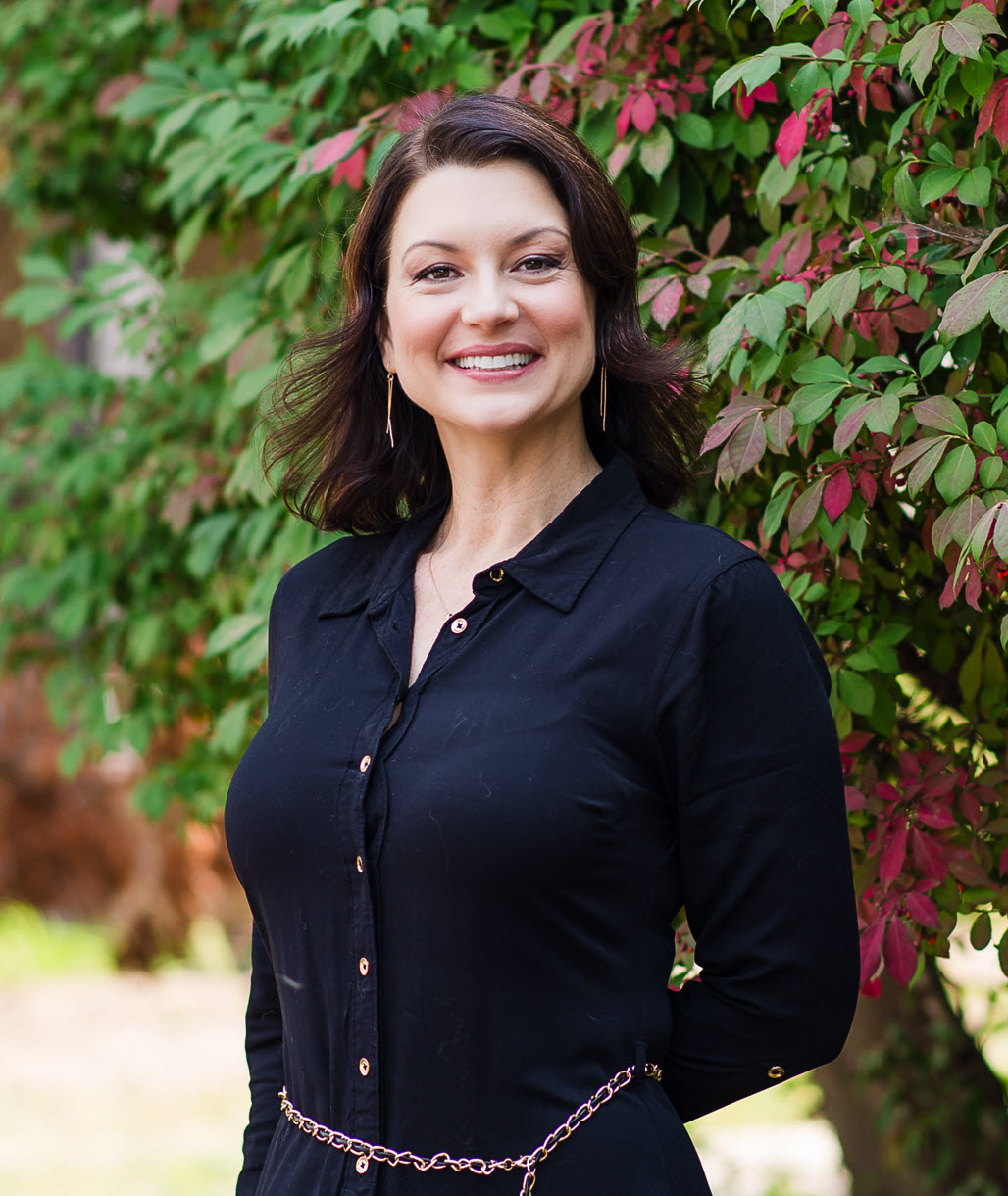
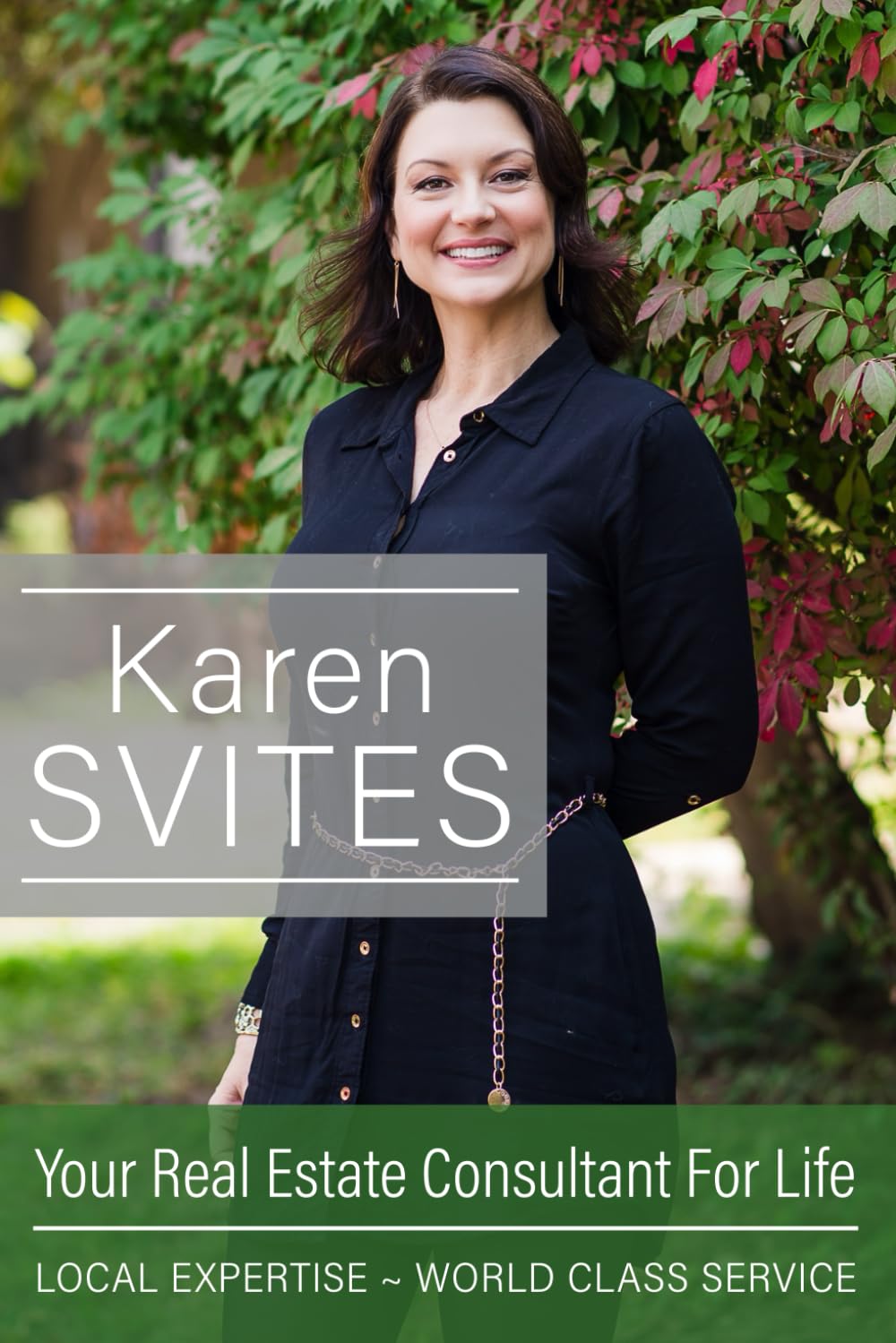
Karen Svites is the founder of Karen Svites Realty, Inc. and an independent REALTOR® serving Asheville, Weaverville, and Western North Carolina since 2008. Before real estate, she trained as an opera performer, earning a bachelor's and master's in performance, and built her own esthetics practice, a background that taught her to listen closely, communicate with care, and see the potential beneath the surface.
She has served clients through a recession, a pandemic, and Hurricane Helene, and she runs a boutique, by-referral practice because she believes world-class service should feel personal, not transactional. She is direct, protective of her clients, and, in her own words, constitutionally unable to lie. Above all, she is a consultant for life, not for a single transaction.
Your Real Estate Consultant For Life is not a book about sales tactics or market-domination strategies. There are no cold-calling scripts and no team-building playbooks.
Instead, across five chapters, Karen traces how the lessons of her life, a mother who could not lie, a father who left handwritten notes on the stove before dawn, a decade in opera and esthetics, and a career built through recession, COVID, and Hurricane Helene, became a way of practicing real estate that treats every transaction as a sacred trust.
It is the story behind the agent you may be considering hiring: why she tells the truth even when it costs her, why she treats your money as her own, and why she walks through the emotional weight of home right alongside you.
Each chapter takes a lesson from Karen's life and shows what it means for the person on the other side of the transaction. Tap any chapter to read more.
If someone had told me that being put on a train at six years old would shape how I serve my clients today, I wouldn't have believed them. But that's exactly what happened to my mother, and it changed everything about how I show up in the most important transactions of people's lives.
You've probably had a moment when someone's harsh truth hit you sideways. Maybe a parent, a boss, or a mentor delivered feedback that stung even though you knew it was accurate. The words were right, but the delivery left you unable to hear them. You might have walked away thinking they had a point, but feeling more hurt than helped.
My mother, Mary Ganey Svites, grew up moving between Springfield, Missouri, and Georgia, and eventually settling in the heart of Washington, D.C. Her childhood was marked by instability as her father, George, worked as a prison guard, constantly searching for better opportunities. They lived at 7th and I Street in D.C., a neighborhood that wasn't known for its safety or prosperity. They were lower class, though my mother didn't fully realize it as a child.
But at six years old, everything changed. My mother was energetic, willful, loud, and passionate. These qualities overwhelmed her parents, who decided they couldn't handle her anymore. They also said they couldn't afford her. So they put her on a train by herself from D.C. to Texas to live with her aunt. Six months later, her aunt decided the same thing and shipped her back.
Think about that for a moment. Imagine being six years old, rejected twice, told you're too expensive, too loud, too much. What story would you tell yourself about your worth? What wounds would you carry into adulthood, into your career, into how you parent your own children?
My mother became a stay-at-home mom for twenty years, raising four children before re-entering the workforce. She gravitated toward bookkeeping and accounting, working in accounts payable and receivable for larger companies. She had been a bank teller before marriage, and when she returned to work, she chose careers centered on tracking money. Looking back, it makes perfect sense. She'd been told she was too expensive, so she built a life around ensuring every dollar was accounted for.
Her parenting style was strict, punitive, yet passionately loving. She showed up. Always. No matter what event or need arose, she was there at all costs. There was never a question about her attendance, only about how she'd deliver the message when she arrived.
"I can't stand a liar!" she'd say, her voice leaving no room for interpretation. Everything with my mother was black and white. No gray areas. No soft landings. No room for excuses or half-truths.
Because of her, I literally cannot lie. If I try, it sounds like I have cotton in my mouth. When you work with me, you're getting the truth, always, because anything less is simply impossible for me to deliver. This isn't a marketing promise. It's a fundamental inability to be anything other than honest.
Here's what I also learned from watching her: being right isn't enough. My mother would dislike nine out of ten people she met, and she'd have a huge list of valid reasons why. She'd share these reasons brutally, harshly, and too directly. The fascinating thing was that she was usually right. Her assessments were accurate, her observations were sharp, her conclusions were sound. But her delivery was so off-putting that people couldn't hear her wisdom. They'd walk away offended, hurt, or angry, even though everything she said was true. She had the gift of accurate perception but lacked the ability to package it in a way that allowed people to receive it.
Think about the times in your life when someone gave you advice that turned out to be correct, but you couldn't take it because of how they said it. Maybe it was a family member who saw a relationship problem you were blind to. Maybe it was a colleague who identified a flaw in your business plan. They were right, but their tone made you defensive instead of receptive.
My mother gave me tenacity. Once she made up her mind, it was basically done. It was just going through the motions. There was never a question of whether there would be an unfinished task. She had an enormous work ethic, no matter what she was doing. Whether she was sweeping the floor or keeping books for a waste management company serving the greater Washington area, she was meticulous. Completely focused.
I saw her long to explore her career, to develop that side of herself more fully. She had been in banking before marriage and clearly had the mind for complex financial work. But circumstances and choices limited how far she could go.
Most of my memories prior to age ten involve her hustling around the house. Stone-faced during work, using her flip-flops to take laundry out to the clothesline, getting dinner on the table, moving with purpose and intensity. She softened when grandkids came, but during my formative years, she was all business. Stern, focused, relentless.
I have three older brothers who each played unique roles. David is ten years older and was more of a second father figure. He taught me unconditional love. He's a medevac state trooper in Maryland, addressing trauma patients from a helicopter. When Hurricane Helene hit Asheville and nobody could call out, he was ready to take the helicopter down to find me. That's who he is.
Duane and I bonded over the long journeys of both parents being sick over the past twenty years. We teamed up because we were the two who could deal with the heaviness of it all. He's the Bomb Squad and Special Operations Division Commander, Department of State Police. He has a tremendous work ethic and will always have my back, unquestionably.
Craig, five years older, was the traditional sibling relationship. We yelled at each other, stole from each other growing up, but we also played together. We explored in the woods behind our house, playing fantasy games, Star Wars, and Matchbox cars. That's translated into our adult life, where we go camping together in national forests, raft on the Colorado River, and bond on family trips with our children.
My parents owned 1.3 acres in Hughesville, Southern Maryland. It was a super small town, mainly tobacco fields, pretty rural even though it was just forty minutes from D.C. There was a big Amish community there with an Amish market. That's where Hughesville was. Very small.
Having that acre of land to explore, that stability of home ownership, that space to be loud and energetic without bothering neighbors, all of it mattered. The values my mother demonstrated about home, about showing up, about being present no matter the cost, those became the foundation of how I approach my clients' most important asset decisions.
When I say I learned honesty from my mother, I'm not talking about a casual commitment to telling the truth. I'm talking about a bone-deep inability to be dishonest, forged by a woman who'd been rejected as a child and built her entire identity around being someone whose word you could trust, even if you didn't like how she said it.
When I say I learned tenacity, I'm talking about watching a woman complete every task she started, no matter how exhausted she was, no matter how difficult it became. Nothing stayed unfinished. Ever.
When I say I learned the importance of showing up, I'm talking about a mother who never missed an event, never backed out of a commitment, never let her children wonder if she'd be there. She was there. Always.
And when I say I learned that delivery matters as much as accuracy, I'm talking about watching brilliant observations fall on deaf ears because the packaging was wrong. I learned that being right is necessary but insufficient. You must also be heard. You must also be receivable.
In your real estate transaction, you need someone who will tell you the truth even when it's uncomfortable. But you also need someone who's learned how to deliver that truth in a way that serves you rather than alienates you. You need honesty with wisdom. Accuracy with grace. Strength with skill.
That's what my mother gave me, both through what she did well and what she struggled with. Every lesson, every value, every strength I bring to your transaction was forged in that household, watching a brilliant, wounded, honest woman navigate a world that didn't always know how to receive her gifts.
Every morning at 3 AM, my father was already gone. Ronald Svites worked for the CIA and held a part-time job on top of his full-time position. I rarely saw him during waking hours, but I felt his presence every single day.
You know what it's like to wonder if someone really cares, don't you? Maybe you've worked with people who were physically present but emotionally absent. Maybe you've hired professionals who went through the motions but never really invested in your success. The difference between performing a role and genuinely caring changes everything about the outcome.
On the hood of the stove, held by a random magnet from our cluttered fridge, there would be a note. Every single morning without fail. A small piece of paper, about four by five inches, covered in messy handwriting that I learned to decipher.
"You're doing a great job. You're a fantastic, smart girl. Do your best. Love your mother. I know your mom is tough, but you can still love her."
These weren't just notes. They were proof that someone who worked more hours than seemed humanly possible still took time to connect. My father missed work only once, when he had a heart attack. Otherwise, he was there, grinding, providing, showing love, the only way his schedule and personality allowed.
I would wake up and run to find these notes. They became the anchor of my morning routine, the reassurance that even though I didn't see him, he was thinking about me. He was present in a different way than my mother, but no less powerfully.
My father grew up in Hellertown, Pennsylvania, right beside Bethlehem Steel. His grandfather came through Ellis Island, part of a wave of immigrants who settled in close-knit communities that kept old traditions alive. They spoke Windish, a derivative of Hungarian that most people don't recognize anymore. My great-grandmother never spoke English. My grandfather still spoke Windish when I knew him.
That heritage taught my father something about roots, about community, about the value of consistency within tradition. He was a quiet, intelligent boy, according to my grandmother and aunt. Kind of a mama's boy. Very different from my mother's loud, passionate energy.
His father had tried various ventures to make a living in the area. A diner, then a garage, trying different things to support the family after returning from World War II. They were on the poor side but not destitute. It was a working-class community where everybody knew each other, where reputations mattered, and where your word was your bond.
My father was unshakable. Whether it was training from the CIA or just his nature, that man could never be shaken. Even on his deathbed, he maintained a strength I've never seen replicated. He was honest, but unlike my mother, he could tell you difficult truths in a way that made you say thank you by the end.
His delivery was completely different. Where she was harsh and direct, he was gentle and measured. Where she would bulldoze through social situations, saying exactly what she thought, he would step back and let her handle things unless specifically tasked with a difficult conversation. Then it was guaranteed to go well.
He was still shy in certain social settings. That quiet little boy from Hellertown never fully left him. But he'd also seen enough of the world through his work to know that staying quiet and observing often gave you more information than talking. He was extremely smart, and I think it was entertaining to him to be stoic and watch everyone flounder around him. I used to joke, "Is this a CIA mind game? You're not telling me a lot!" And he'd just smile that quiet smile.
My father loved routine to an almost comical degree. We took the same family vacation every single year. Castle in the Sand in Ocean City. Boardwalk. Waterpark. Phillips restaurant. The Creperie. Same activities, same restaurants, same hotel room if they could get it.
This went on for twenty years. It started three years before I was born and continued until I was a junior in high school. My oldest brothers phased out as they got older, but the vacation itself never changed. Not once. Same trip, year after year, and my father loved every iteration of it.
Some people might see that as limiting, but I saw it differently. He knew what he loved. He didn't need novelty or variety to be happy. He found deep satisfaction in the familiar, in the predictable, in knowing exactly what to expect. There's a kind of peace in that.
Here's what I learned about communication from those notes: heartfelt matters more than frequency. Quality matters more than quantity. Thoughtfulness matters more than speed.
My father could never express emotion face-to-face. Never. But in those handwritten notes, he could tell me he loved me, that he was proud of me, that he saw my struggles with my mother and wanted me to know I could still choose love even when things were hard.
That shaped how I communicate with clients. I struggle with the quick ninety-second follow-up call that goes, "Hey, what have you been up to? Anyway, if you know anyone needing to buy, sell, or invest in real estate, can you introduce them to me?" I just can't do it.
When I reach out, I need to be on the phone for fifteen to twenty minutes. I need to schedule dinner together. I need to bring you a cake. If your dad died, I need to go to the funeral. There's a whole day of follow-up attached to it, and that's what feels authentic to me. It's not necessarily productive in terms of volume, but it's real. It's heartfelt. It's the communication style I learned from a father who couldn't say it to my face but made sure I knew it every single morning through notes on the stove.
My father's work ethic made my mother's incredible work ethic look modest by comparison. He would leave at 3 AM and work full-time plus part-time jobs. He never complained. He never acted like it was a burden. He just did it because that's what providing for your family looked like to him.
But he never let work completely consume him. Those notes proved it. Every morning, before he left in the darkness, he took time to write something personal, something encouraging, something that connected us even when we couldn't be in the same room.
You can work incredibly hard and still show people they matter. You can have an insane schedule and still be present in meaningful ways. You can be exhausted and still make deposits into relationships that count.
When my father did have to deliver difficult messages or handle challenging situations, people listened. Not because he was loud or forceful, but because he had such natural authority that came from his groundedness. He didn't need to prove anything. He didn't need to dominate conversations. He just was who he was, and that carried weight.
He would rely on my mother to deliver messages in most social situations because, frankly, it was easier and sometimes entertaining to watch. But when he was specifically asked to deal with something, it was handled with grace and effectiveness.
That taught me something crucial: you don't have to be the loudest voice in the room to have the most influence. You don't have to dominate to lead. Sometimes strength looks like quiet confidence, like showing up consistently, like saying less and meaning more.
My father was a creature of habit, but that translated into extreme consistency. He was reliable in a way that made you feel secure. You knew exactly where you stood with him. You knew he'd be there. You knew his word was good. You knew he loved you even if he couldn't say it out loud.
In real estate, consistency matters more than almost anything else. Markets fluctuate. Interest rates change. Inventory varies. But if you have an agent who shows up consistently, who communicates consistently, who demonstrates care consistently, you can navigate all the external chaos.
That's what my father taught me through those notes. That's what By Referral Only reinforced when I started getting their newsletters consistently over the years, maintaining contact with clients I'd never called even once. One of those clients called me out of nowhere after ten years of newsletters and hired me for a transaction.
Consistency isn't glamorous. It doesn't make for exciting stories. But it's the foundation of trust, and trust is everything in this business.
When you work with me, you're working with someone who learned that genuine care takes time. That thoughtful communication matters more than frequent but meaningless check-ins. That you can't fake a heartfelt connection, and you shouldn't try.
You're working with someone who understands that an unshakable presence during chaos creates the space for good decisions. That gentle authority often accomplishes more than aggressive negotiation. That consistency over time builds relationships that last forever.
My father gave me a blueprint for how to show up in people's lives even when circumstances make it difficult, how to communicate love and care through intentional acts rather than empty words, how to be reliable, grounded, and present in ways that actually matter.
Those notes on the stove weren't just morning messages. They were a masterclass in how to care for people when life is demanding everything from you. And every client I serve benefits from those lessons, whether they realize it or not.
Twelve years passed between leaving high school and finding real estate. Those years weren't wasted. They were preparing me in ways I couldn't have imagined.
You've probably had a moment when something terrified you so much that you couldn't look away. Maybe it was a career change, a business opportunity, or a relationship that required more courage than you thought you had. That moment when your brain freezes and your next thought is: I have to figure this out.
I got my bachelor's and master's in opera performance. I worked as an opera singer in regional houses across the North Carolina Piedmont and Western North Carolina, performing roles that challenged me technically and emotionally.
My journey into opera started with my mother's Porgy and Bess record. She'd never played it. One day, I found it and heard Bess singing. Something changed in me. There was a spirit that came over me when I heard that fabulous singer. The feeling was indescribable, transformative.
I thought: I have to learn how to do that. I knew I could sing, but not like that. Not yet. I had a long way to go, but the compulsion was undeniable.
This pattern has defined my entire life: when I see excellence that scares me, when I encounter something that seems impossibly difficult, I can't let it go. I have to master it.
Being on stage was a safe place for me. Growing up in a household that wasn't easy, I loved having a space where I knew what was going to happen. I could get lost in a character, explore a whole different personality, stand up there and share my heart with people who cared and wanted to hear it. That's really cool. That's amazing.
Overlapping with my opera career, I got my esthetician license. I worked as a spa manager, then as an esthetician trainer, before opening my own private practice doing facials. I could do facials during the day and rehearse and perform in the evenings.
When I started in aesthetics, I worked for someone else and made fifty percent of the revenue. I looked at the numbers and thought, "This doesn't make sense." Why don't I just spend a little upfront money and make one hundred percent? I was intrigued by the challenge. What does that entail? I'm going to give this a try.
The aesthetics work taught me how to make things look good. How to take something that has aged or accumulated character over time and present it in its best light. How to see potential beneath surface imperfections. These skills translated directly into real estate, though I didn't know it yet.
I stumbled into real estate through a dinner with a girlfriend I hadn't seen in a while. She mentioned a position at the real estate development where she worked. The hours were odd, every weekend, strange shifts, but I was curious enough to explore it.
Then I actually saw real estate sales happening. My reaction was immediate and intense: That looks terrifying. Brain freeze. I'm so young, so ignorant about this. I have to talk to people about something I don't understand at all. I felt paralyzed by how much I didn't know, by how complex and high-stakes the conversations seemed.
And then, immediately: I've got to learn how to do that. Anything that really scares me, I can't stop until I figure it out.
This isn't bravery. It's deeper than that. It ties into having no regrets. I don't want to be dying someday thinking that something scared me, so I backed off and never did it.
I watched my mother die with enormous regrets. She always wanted to become a nurse, but never did. She wanted a career, travel, and a larger life, but she felt she lived very small. Despite her incredible work ethic and sharp mind, she was an angry, miserable person as a whole.
I took care of her for the last year and a half of her life. I walked right to the door with her as she took her last breath. What broke my heart most wasn't her dying. It was all the unfulfillment she felt. All the dreams she never chased because they scared her, or the conditions weren't perfect.
My father was different. He lived life his way. He really did. He'd had a poor example set for him by his own father, but he looked at that and said, There's no way I'm doing any of that. I'm going to be steadfast, reliable, and honest. A great father and grandfather figure as much as I can be.
He had more peace than my mother, but he also limited himself. He lived somewhat small. Never comfortable socially. Never tried new things beyond that annual vacation routine. He loved his routine, but I think he could have experienced more if he'd been willing to push past his comfort zone.
Watching both of them taught me: don't let fear or comfort keep you from the life you actually want.
I got incredibly lucky in my first real estate job. I worked as an unlicensed assistant for Amy Hurst, the top producer in the area by a landslide. She was selling around forty million dollars in 2007 by herself. The closest competitor was at one point five million.
Amy was less than five feet tall, but she would walk out to greet walk-in clients with such confidence that million-dollar buyers would end up purchasing that day. I watched her establish authority with wealthy clients who wanted to control the conversation. She wouldn't let that last long. By the time they came back from viewing properties, they were like old friends for life.
I sat in our shared office listening to her on the phone, watching her send notes and gifts, seeing how effortless she made it look. You could feel the love from her. The trust. The generosity. When I got sick after knowing her for only two months, she made me homemade chicken noodle soup and brought it to work. A servant's heart is the smartest business strategy. Amy was the smartest person in every room, but nobody knew it because she made everything about them.
I only got six months with her before she left the state. I was devastated, crying hard when she told me. But sometimes you only get a short time with a master. Just long enough to see what's possible, not long enough to become dependent. That forced me to figure it out myself.
When I had two infants, one was two months old and the other was three weeks old. That's when I started taking them to appointments with me, wearing them in carriers.
The preparation was intense. It was a whole one to two-hour process: get the appointment scheduled ahead of time, breastfeed them, change diapers, give them toys, get them to sleep, and wear them properly. Then I'd be ready for the showing or consultation, praying they wouldn't wake up.
Every morning, I was scared to death thinking about all the unknowns. Are they going to be sick? Will they have an upset stomach? Will they cry during the presentation? But I'd tell myself: I'll just figure it out.
There were a couple of times it was disastrous. I got dumped hard by clients who couldn't handle it. It sucked. But I kept going because I learned from both my parents that you show up, you do what needs to be done, and you don't quit just because it's hard.
During COVID, I taught my kids during the day, one in Kindergarten, and then woke up at 2 AM to put together listings, presentations, and marketing materials. That was the only time available. I would do whatever it takes. My kids are homeschooled now, one in Kindergarten and the other in preschool, and I had to balance everything.
The recession came. The development company was bought twice and ceased to exist. I was the last standing agent, forced to figure out how to work outside that protected environment. It felt like starting over, especially because the market had tanked.
I joined a small mom-and-pop company in Weaverville because I needed to figure things out in a smaller environment. Keller Williams eventually bought them. I stayed for twelve years and gave them hundreds of thousands of dollars in fees. Finally, I thought: Why am I giving this to them instead of investing it in my clients' properties and marketing? So I opened my own firm: Karen Svites Realty.
Now, instead of paying huge franchise fees, I invest that money directly into your house, your marketing, and your transaction. You get better marketing, a faster sale, and sharper professionals, but I'm not funding someone else's lead generation website.
After Amy left, I was floundering, trying to figure out how to sell just around town. There was a fellow named Jacob Lions whom I'd worked for in his spa. He had a real estate background and was selling successfully. I sat down with him and said I was at a crossroads.
He knew me well from when I'd made his esthetician department very successful, run the front desk successfully, and started a whole social wine club successfully. He knew I delivered results. He took me under his wing. He told me I was going to be amazing at this. He'd let me come on showings with him and watch him show places, because I'd never shown anything outside of that development. He'd check in on my negotiations and contracts, always encouraging.
Jacob saw success in me when I did not. I was unsure. His belief gave me the confidence to keep going when I felt lost.
My kids have worked in this industry whether they wanted to or not. Lydia is eleven now. If I'm going to a listing or buyer appointment with a family that has kids and they don't have a babysitter, I tell them to absolutely bring their kids. Lydia watches them. I pay her ten dollars an hour. She's wonderful with kids. At one appointment, the mom was shocked. She peeked out the window and said, Oh my gosh, they're playing and they haven't been inside here in an hour. This is great.
Xan, Alexander, we call him Xan, is nine. He gets paid to open lockboxes and help me measure rooms. I don't trust laser measurers because you can get sued for inaccurate measurements. So I measure by hand, and he holds the measuring tape. He helps with putting signs in. He's hands-on.
They attend showings sometimes begrudgingly. "How many houses? How long is this going to take? What side of town is this on?" But they're seeing things, learning the business. If they want to go into real estate, they'll have a big step ahead.
When I heard Porgy and Bess, I had to master that. When real estate terrified me, I had to master that. When I opened my esthetician practice, I had to master that. This pattern defines everything.
Excellence isn't about perfect conditions. It's about showing up scared and doing it anyway. It's about looking at something impossibly difficult and refusing to walk away until you've figured it out.
My mother never chased her nursing dream. My father never pushed past his comfort zone. I learned from both: chase the things that scare you. Don't die wondering what could have been. If there's a will, there's a way. Just figure it out.
When you work with me, you're working with someone who's figured out how to turn terror into calling, how to transform fear into fuel, how to show up even when conditions aren't perfect. That's what those twelve years taught me. That's what wearing babies to showings taught me. That's what opening my own firm taught me. You don't wait for readiness. You become ready by starting.
I treat your money like my own. That's not a slogan. It's how I operate every single day.
You've probably hired someone who said they'd treat your money carefully, haven't you? Maybe they did, maybe they didn't. But did they understand that your money represents more than numbers in an account? Did they see that your relationship with your home carries wounds, attachments, fears, and dreams that go back decades?
Real estate agents eventually become coaches, whether they intend to or not. Some of the most rewarding experiences I've had involve working through deep-rooted wounds that people carry about homes.
I've met people with profound fears of homelessness after watching their single mother struggle. People who grew up in homes that were always falling apart, who carry that terror into every housing decision as adults. People buying their first home at age sixty-plus because commitment issues or fear paralyzed them for decades.
That's hard for them. If they'll let me, I'll walk through it with them. I've had people cussing and crying at me. Every emotion imaginable. Nobody's tried to punch me yet, and hopefully never will.
When you can walk through something that profound with someone, you bond in a way that creates relationships lasting forever. You can't experience that level of vulnerability and support without becoming connected permanently.
I consider your money my money. I look for ways to build your net worth in every conversation, every quote, every negotiation, whether you know it or not.
When I get a message from an opposing agent asking for a ten-thousand-dollar price reduction based on inspection items, I don't just forward it to you and ask what you want to do. I read between the lines. I understand whether this is a negotiating tactic or a genuine deal-breaker. I assess the buyer's commitment level based on the language used. I create a counter-strategy that addresses legitimate concerns while protecting your equity. Then I present you with a clear recommendation based on reading the situation accurately through eighteen years of pattern recognition.
You hired me to make you money or save you money. That's what I do. Not sometimes. Every time. In every interaction.
Because people in real estate can be so greedy, because I've seen clients desperately try to lie or manipulate situations to gain short-term advantages, I won't participate. I encourage them firmly toward ethical paths.
I'm not going to put you in harm's way or in a position of losing money. But there's always a way to present information legally and honestly that's more ethical than what some people would choose.
You can still be savvy. You can still be a skilled negotiator. You can still get excellent results. And you can still do the right thing. Those aren't opposites. They're complementary.
Picture this: You're selling your home. The inspection reveals issues you didn't know existed. Another agent might suggest you hide them, price the house to move quickly, and hope buyers don't notice. You could potentially make fifteen or twenty thousand dollars more this way.
I'll tell you a different approach. Here's what's legal and honest. We disclose this. We price accordingly. We position this home for buyers who understand that character and bones matter more than cosmetic perfection. You'll sleep well at night, and you won't get sued later.
Which approach serves you better long-term? The one that maximizes your short-term gain through deception, or the one that protects your integrity and legal standing while still getting you an excellent result?
Home isn't just where you live. It's where you put down roots. It's where your children grow up or where you retire after decades of work. It's where you heal from divorce, celebrate promotions, or grieve losses.
Letting go of a home is as emotional as finding one. Everyone letting go is moving toward something else. A new job in another city. A relationship that requires relocating. Retirement to a dream location. Downsizing after children leave. Upsizing because the family is expanding.
Some people make these moves after several months. Others make them after several decades. Either way, you're navigating a highly emotional transition that requires someone who understands both financial and emotional dimensions.
I've worked with people who watched their single mother struggle to keep them housed, who carried that terror into adulthood and made conservative housing decisions out of fear rather than wisdom. That fear was trying to protect them, but actually limited them.
I've worked with people whose parents lost their home in foreclosure, who swore they'd never be in that position and consequently never took appropriate financial risks that could have built wealth.
I've worked with people who grew up in homes that were always in disrepair, who associated home ownership with burden rather than asset building.
These wounds are real. They're valid. And they influence every decision you make about real estate, often unconsciously. If you let me into that space, I can help you navigate it in a way that heals rather than reinforces the old pattern.
First: I build your net worth in every conversation, quote, and negotiation. You hired me for financial results. That's my primary job.
Second: I don't lie for you, and I don't let you lie either. There's always a legal, honest way to present information that serves your interests without compromising your integrity.
Third: I honor the emotional weight of home transitions. This isn't just a transaction. It's a life passage that deserves to be treated with respect, patience, and skill.
Here's what most people don't ask their agent: How do you handle it when I'm at my worst? Because you will be. Real estate brings out people's absolute best and absolute worst quickly.
I've seen it hundreds of times. Someone shows me their nastiest. They're ugly, they're angry, they say things they don't mean. And I'm still standing there. I still care about them. It's okay. That nasty side isn't permanent. It's a moment in time. I'm mature enough to handle it and help people move toward who they really are and who they really want to be.
My mother would make snap judgments about people and live with that assessment forever. I do the opposite. I see one dimension of how we all behave at certain points. I acknowledge it. I work with what's useful while we get you what's really important.
Real estate client relationships require parenting skills sometimes, emotionally speaking. You hold space for someone's worst moment without defining them by it. You set boundaries while maintaining compassion. You tell hard truths in ways that can be received.
I learned those skills raising my own kids while building this business. When Lydia was two months old and Xan was three weeks old, I had to manage their needs while serving clients. That required emotional intelligence, timing, preparation, and grace under pressure.
Those same skills serve you during your transaction. Managing emotions, timing difficult conversations appropriately, preparing for contingencies, and maintaining grace when things get chaotic.
When you hire me, you're not just buying technical competence. You're buying someone who treats your money as their own. Someone who won't compromise integrity for short-term gains. Someone who understands the emotional weight of home transitions and has the skill to navigate that respectfully.
You're buying someone who's walked through hundreds of these passages with people, who's seen every variation of fear and hope and attachment and loss, who knows how to hold space for all of it while still getting you excellent financial results.
This isn't just about buying or selling a house. It's about honoring what home means while making smart financial decisions. It's about walking through a major life transition with someone who's done it successfully hundreds of times and won't let you stumble unnecessarily.
Choose representation that honors both dimensions: financial savvy and emotional intelligence. Choose someone who learned from both parents that money matters and people matter, and neither can be sacrificed for the other.
Even when we're in the fire, even in super scary or super high moments, I stay grounded and make it work.
You've been in the fire before, haven't you? That moment when everything in a transaction feels like it's falling apart. When you're paralyzed by choices, drowning in information you don't know how to process, and uncertain which direction to move.
I have a strong sense of humor, and timing is everything. When somebody is in their ultimate fear state, I go there with them first. I acknowledge it. "This is scary. What you're feeling is completely valid."
Then I help them shift perspective. "Okay, you're scared because you're in the fire. Let's step out of the fire for a moment. Let's look at this from outside the circle and see if it's something we can actually deal with."
Hopefully, in there, I make some jokes to lighten the intensity. That shift from participant to observer, from reactive to reflective, that's vital. Humor isn't about dismissing feelings. It's about creating enough space that feelings don't consume you.
Joe Stumpf from By Referral Only talked about minimizing turbulence. There are thirty types of turbulence in a real estate transaction. My job is to see what needs addressing immediately and what I can manage quietly in the background.
When I look at a transaction, I see all the moving parts. But you don't need to see all of them at once. That would overwhelm you. So I prioritize: we handle these two things right now, I've got this other issue managed, and we'll address that third thing when the timing is right.
An overwhelmed brain cannot make good decisions. When someone is flooded with too much information or too many choices simultaneously, they freeze. They either make impulsive decisions to escape the discomfort or they avoid decisions entirely. My job is to protect you from that overwhelm so you can think clearly and choose wisely at each decision point.
We make it through the whole list of everything that needs to happen, but we do it sequentially, strategically, in a way that keeps you functional and confident throughout.
At this point in my career, when I get a text or email from an opposing agent or a buyer I'm not working with directly, I know what's really happening. Just by what they say, when they say it, how they phrase it, I understand their motivations, fears, desperation, and leverage position.
This didn't happen overnight. This is eighteen years of watching patterns, reading between lines, and understanding human behavior under the stress of major financial decisions.
When an agent writes "my buyers are concerned about the inspection findings and are requesting a ten thousand dollar credit," I'm reading far more than those words. I'm assessing: Are they genuinely concerned or testing boundaries? Is this buyer committed or looking for an exit? Does the agent have control of this situation, or are they being pushed around by their client? What's the real negotiation here?
Then I use that information to direct you toward decisions that serve your interests. You're not just hiring technical competence. You're hiring pattern recognition honed through thousands of interactions.
You need someone who's an excellent judge of character. Not just your character, but everyone involved in your transaction. The other agent. The buyer or seller. The inspector. The appraiser. The loan officer.
Real estate is a people business. People behave differently under stress, under time pressure, and when large amounts of money are at stake. Some rise to the occasion. Others crumble. Some negotiate in good faith. Others play games.
After eighteen years, I can predict with high accuracy how people will behave as transactions progress. That allows me to prepare you, to set appropriate expectations, to position you advantageously from the beginning.
I see potential in people and properties even when they're covered by mess. I see the seed of what can be. The true possibility beneath current conditions.
This applies to homes. I walk into a property that looks dated or poorly maintained, and I see what it can become with the right positioning, the right staging, and the right buyer who values bones over cosmetics.
This applies to people. I see buyers who seem uncertain but actually have strong conviction underneath. I see sellers who present as inflexible but actually need permission to be flexible. I see agents who seem adversarial but are actually just protecting overwhelmed clients.
Locking onto that potential, onto that seed of possibility, that's what allows me not to take things personally. That's what allows me to stay steady when situations get chaotic. I'm seeing beyond the immediate moment to what this can become.
People think smooth transactions happen by accident. They don't. They happen because someone put in hundreds of hours of invisible work creating the conditions for smoothness.
When I wore my babies to showings, success looked effortless when it worked. But two hours of preparation happened before each appointment. Feeding, timing, and anticipating needs. When it worked, people thought I was lucky. When it didn't, they thought I was unprepared. But I was always prepared. The variables just don't always cooperate.
The same principle applies to every transaction. The smoothness you experience as a client is the visible result of invisible preparation, anticipation, pattern recognition, and strategic positioning that you never see.
That's what mastery looks like. Not making it look hard. Making it look easy through enormous amounts of skilled effort.
I don't trust laser measurers for square footage. They can be inaccurate, and you can get sued for providing incorrect information. So I measure by hand. My son Xan holds the measuring tape while I record.
This has paid off three different times when appraisers got square footage really wrong. They always think it's me. "Your listing has incorrect square footage. You're going to get sued." Then we have a third-party measure, and I'm right. Never more than fifty to one hundred square feet off.
Being right matters. Being accurate matters. Details matter. Measurement matters. You can't shortcut the fundamentals just because technology offers convenient alternatives. Sometimes the old way is the right way.
Picture two scenarios. First scenario: Your agent gets a message from the buyer's agent asking for a ten-thousand-dollar price reduction based on inspection items. Your agent forwards you the message and asks what you want to do.
Second scenario: Your agent gets the same message. They read between the lines, recognize this is a negotiating tactic rather than a deal-breaker, understand the buyer is nervous but committed, and create a counter-strategy that addresses legitimate concerns while protecting your equity. They present you with a clear recommendation based on reading the situation accurately.
Which scenario serves you better? The one where you're left to figure out subtext yourself, or the one where you have expert pattern recognition interpreting signals you can't see because you haven't been here thousands of times before?
Mastery provides certainty in uncertainty. Calm in chaos. Wisdom in confusion. Direction when everything feels overwhelming.
When inspections reveal foundation issues, when appraisals come in low, when buyers get cold feet, when sellers have unrealistic expectations, I remain steady. Not because I'm naturally calm, but because I've navigated all of these situations dozens of times. I know how they typically resolve. I know which issues matter and which ones don't. I know when to push and when to pause.
You need that steadiness during your transaction. You need someone who's been through every variation of crisis and knows how to guide you through it without panic, without overreaction, without making fear-based decisions that cost you money or opportunity.
What story are you telling yourself about representation? Maybe it's "any agent can do this." Maybe it's "I'll just go with whoever is convenient." Maybe it's "it doesn't really matter who I hire."
But what if those are just stories? What if who you hire makes the difference between a transaction that costs you money, time, and stress versus one that protects all three?
Choose someone who's developed the art of seeing what others miss. Someone who reads people, situations, and markets with accuracy earned through eighteen years of intensive practice. Someone who protects you against overwhelm while moving you decisively toward your goals. That's what you deserve. That's what I offer.
What makes Karen exceptional is that she treats real estate like what it actually is: a sacred trust between an agent and a client navigating one of the most significant financial and emotional transitions of their lives.
It is the story behind the way Karen Svites practices real estate. Across five chapters, she traces how the lessons of her life, a mother who could not lie, a father who left notes on the stove before dawn, years in opera and esthetics, and a career built through recession, COVID, and Hurricane Helene, became a way of treating every transaction as a sacred trust. It is a memoir and a manifesto in one.
No. There are no cold-calling scripts, no team-building playbooks, and no market-domination tactics. The book is about the values and experiences that shape how Karen serves people: telling the truth even when it costs her, treating your money as her own, and honoring the emotional weight of buying or selling a home.
Anyone considering working with Karen who wants to understand who she really is before they trust her with one of life's biggest decisions. And any real estate professional looking for a more human, more honest model of the business than the usual sales advice.
Karen is the founder of Karen Svites Realty and an independent REALTOR® serving Asheville, Weaverville, and Western North Carolina since 2008. She runs a boutique, by-referral practice built on truth, consistency, and treating clients like family.
You can call or text her at 828-273-6462, email her at , or visit her at AshevilleBestHomes.com. Whether you are ready to make a move or just starting to think it through, she answers questions directly.
Your Real Estate Consultant For Life is available on Amazon. Use the Buy on Amazon button anywhere on this page to get your copy.
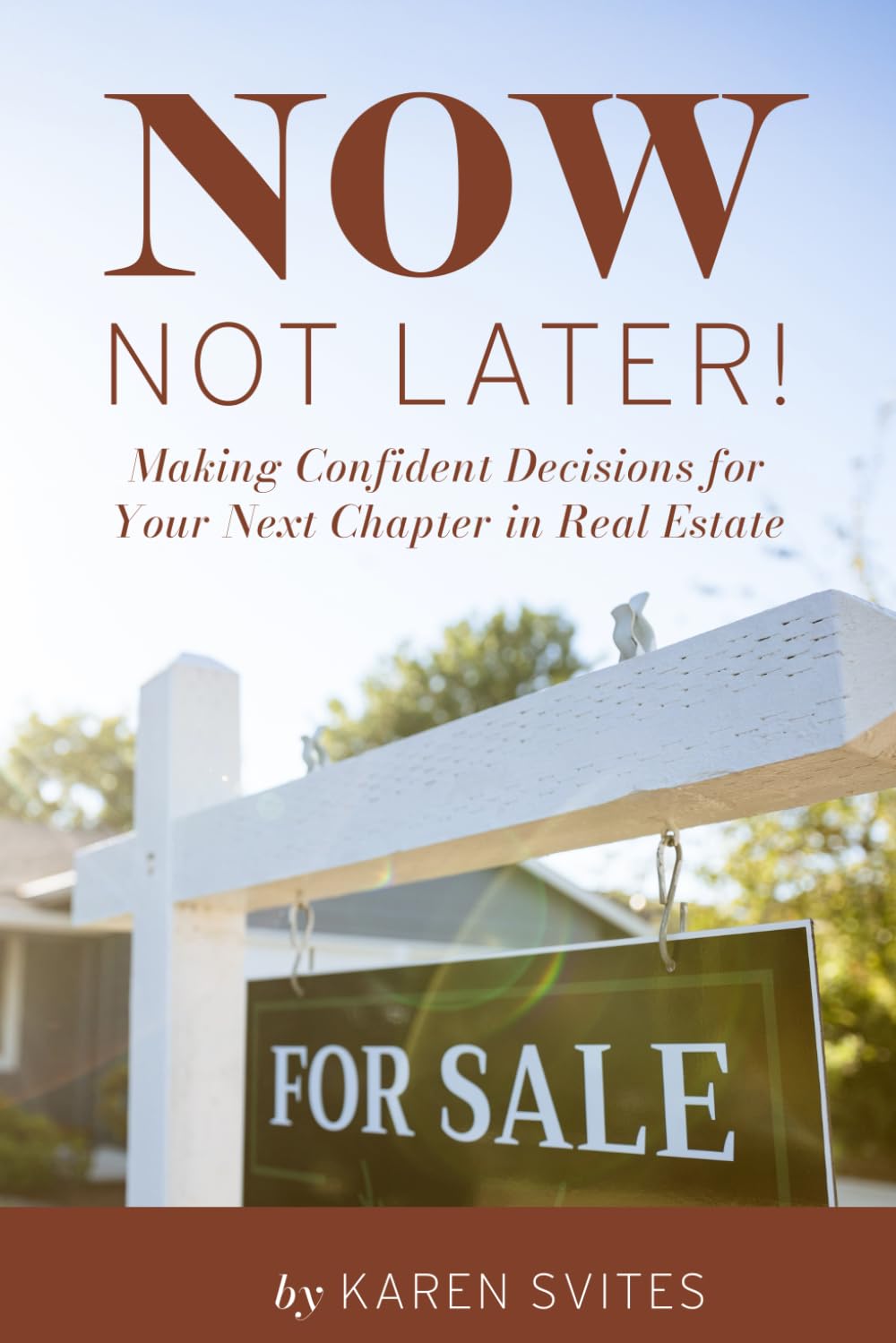
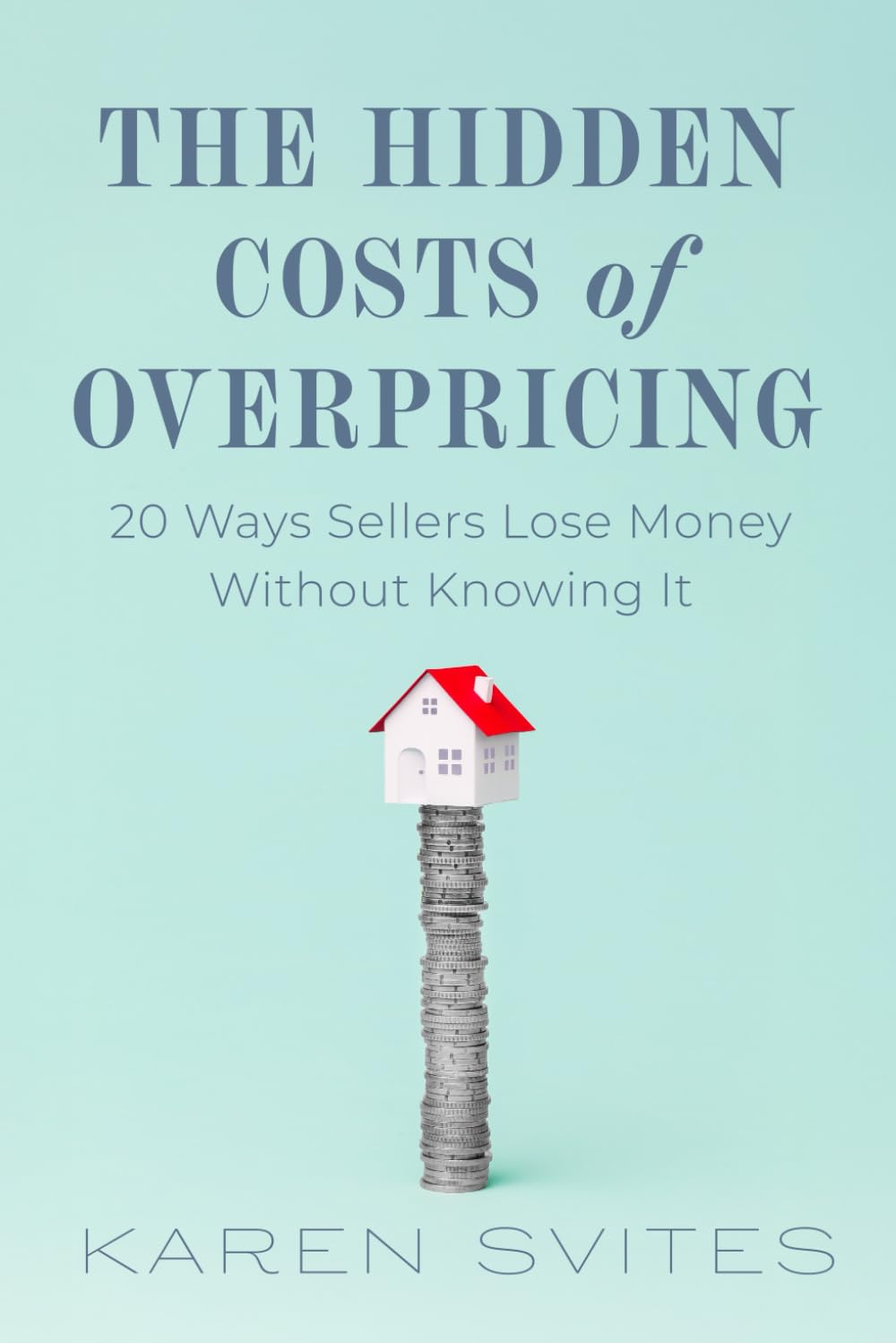
Your Real Estate Consultant For Life is one part of Karen's work. Explore her other books, her podcast, and her Authority Center.


Ready to Begin?